


New Year, New Habits: Ways to Reduce Contaminants in Water
As we step into a new year, many of us think about habits we’d like to adopt that make life a little healthier, simpler, and more mindful. One area that’s easy to overlook but impacts daily life every single day is the quality of the water we use at home. Water for drinking, cooking, brewing coffee, and even filling humidifiers or irons.
Water quality in the U.S. is classified as “safe” under federal regulations, but contaminants are still in local systems. Understanding these issues and adopting practical habits can help you start the year with greater confidence in the water you bring into your home and consume as a family.
What Are Today’s Water Quality Concerns?
Even with municipal treatment systems, water can pick up contaminants at various points. From source water in rivers and reservoirs to distribution pipes and household plumbing, contaminants can end up in your drinking water.
- PFAS (“Forever Chemicals”)
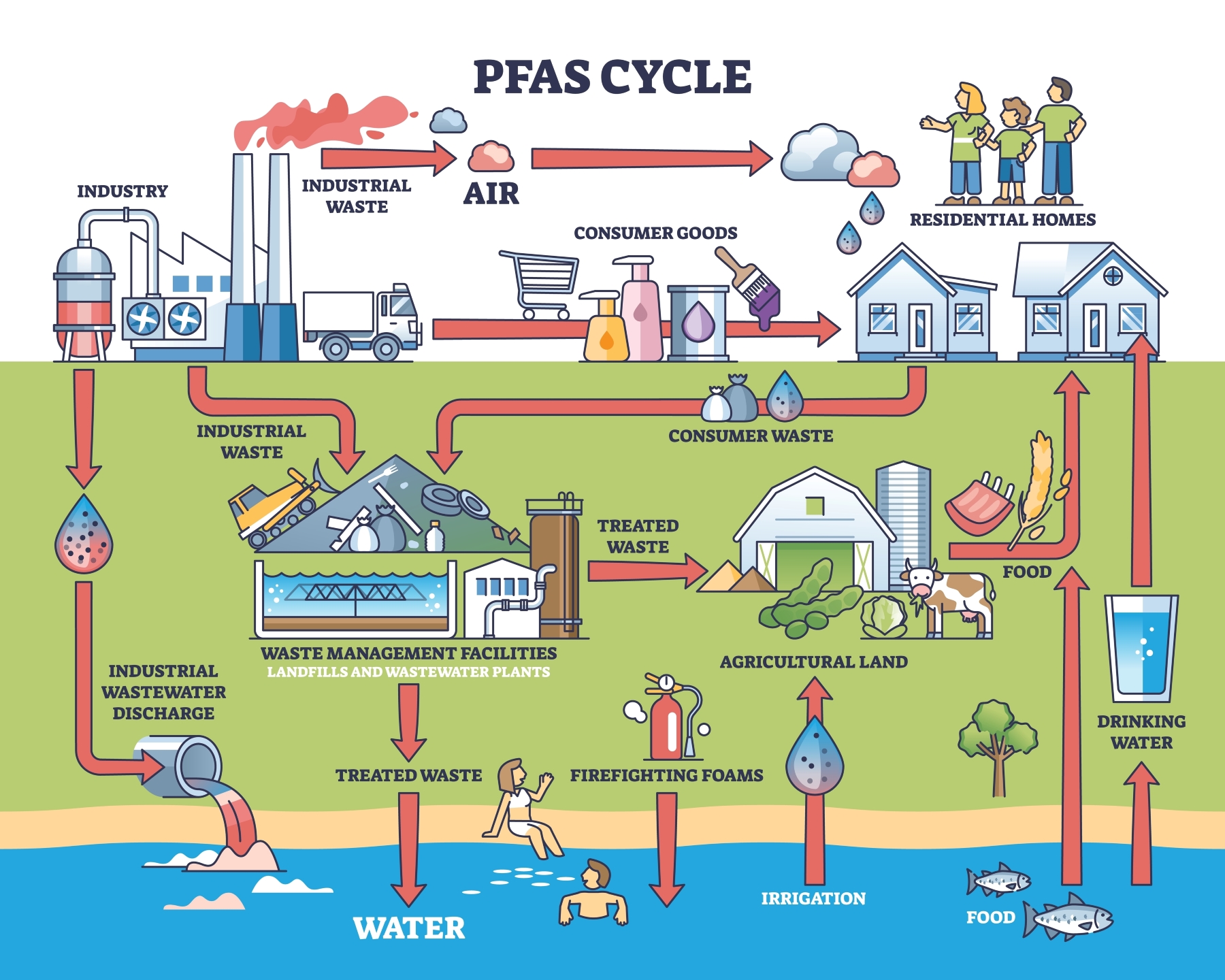
Per- and polyfluoroalkyl substances, commonly referred to as PFAS, are a class of synthetic chemicals that have been widely used in industrial applications, firefighting foams, coatings, and consumer products. Recent regulatory sampling shows PFAS compounds are present in drinking water systems across much of the country. According to recent EPA monitoring data, tens of millions more Americans have drinking water with detectable PFAS than in earlier years.
These substances are persistent in the environment and don’t break down easily, which is why they’re often called “forever chemicals.” They’ve drawn attention because they are widespread, and there is no way to fully destroy them. - Lead and Heavy Metals
Aging plumbing infrastructure in many regions can contribute to elevated lead levels in tap water. It is not common for Lead to form organically in water; it typically enters through corrosion of lead-containing pipes, fixtures, and solder. Lead exists naturally in the earth’s crust, and in some areas, it can be found in bedrock, which can contaminate private wells. Concerns over lead remain in cities with older infrastructure and have been recently documented in local water systems. - Seasonal and Local Contamination Events
Events like wildfires and industrial accidents can introduce additional contaminants into soil and waterways, which may indirectly affect water supplies. For instance, runoff after wildfires has been detected with elevated levels of heavy metals in some areas.
These examples show how water quality can vary and why many households are considering extra steps to protect their water quality and health.
Understanding Why Contaminant Levels Can Change Over Time
Even if your tap water meets federal safety standards, contaminant levels can fluctuate due to seasonal changes, environmental events, infrastructure conditions, and new findings from ongoing national monitoring. For example, droughts and heavy rainfall can alter source-water chemistry, while construction or shifts in water distribution pathways may disturb older plumbing that contains metals such as lead. Emerging contaminants, including various PFAS compounds, may not have been part of routine local testing until recent regulatory updates, which means some systems are only now identifying compounds that were previously undetected. Not to mention that municipal water systems only test for 90 contaminants. That leaves hundreds of contaminants that go untested in your drinking water.
Because water treatment plants optimize for the conditions they expect, sudden shifts in source water or distribution issues can introduce variables that are difficult to anticipate. These changes don’t necessarily mean water is unsafe, but they underscore why many homeowners take an active role in understanding their local water and adopting additional purification practices when appropriate.
Why Adopting New Water Habits Matters
The start of a new year is a perfect time to think about the simple but effective habits that can give you greater peace of mind around water at home. Because contaminants can enter water through multiple routes, relying solely on treatment at the utility level doesn’t always account for distribution-related issues or emerging contaminants.
One practical habit is to explore in-home water purification, distillation.
What Distilled Water Is and How It Works
Distillation is a method that mimics nature’s own hydrologic cycle: water is heated until it becomes vapor, leaving behind dissolved contaminants, and then condensed back into liquid. This process removes a wide range of impurities, including minerals, metals, and most organic compounds.
That means distilled water is free of 99.9% of contaminants that may be present in tap water.
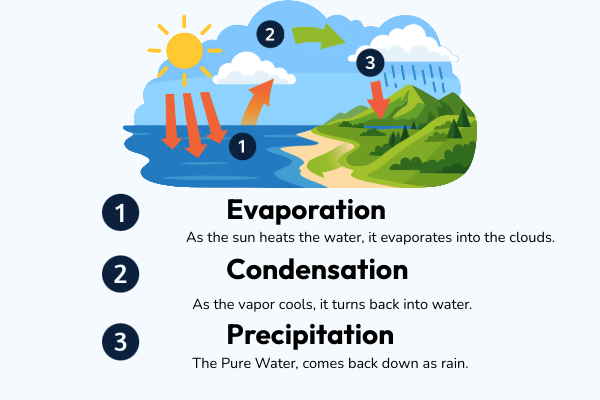
Because distillation removes both organic contaminants and inorganic contaminants, it can serve as a reliable source of pure water for daily drinking.
How Distillation Helps Minimize Exposure to a Wide Range of Impurities
Different treatment technologies remove contaminants in different ranges, and distillation stands apart because it is based on a physical separation process rather than chemical manipulation or selective filtration. When water is heated to create vapor, most dissolved solids, including minerals, metals, and many chemical compounds, do not vaporize with it. As the vapor condenses, it forms water that has left behind the vast majority of these substances (99.9%). This makes distillation a reliable method for producing high-purity water at home.

While no single purification method removes 100% of contaminants, distillation has been demonstrated to be consistent and reliable. It’s reliable in its removal of impurities, including the substances commonly found in municipal reports, such as heavy metals, nitrate compounds, and various organic residues. For households looking for consistency and a dependable baseline of purity, especially during a time when contaminant awareness is increasing, distillation offers a straightforward way to create a controlled water source for drinking, cooking, and everyday use.
Practical Ways to Use Distilled Water at Home
Incorporating distilled water into your routine doesn’t have to be complicated. Here are a few ways to make distilled water part of New Year’s water habits:
- For Drinking and Cooking: Using distilled water ensures that the water you drink and cook with has been processed to remove a broad range of dissolved solids.
- In Beverages: Coffee and tea made with high-purity water can taste cleaner and more consistent.
- Appliances That Matter: Devices like steam irons, humidifiers, and CPAP machines function better and require less cleaning when mineral-free water is used, which extends their lifespan and reduces maintenance.
- Baby Formulas and Pets: For households preparing baby formula or managing pets’ water, distilled water offers a consistent baseline free from mineral fluctuations.
Simple Habits to Keep Your Water Pure in 2026
Adopting new water habits can be as easy as:
✔ Learning your local water quality report. Every public water system issues an annual water quality report detailing detected contaminants and levels.
✔ Testing your home water. Especially if you live in an area with older plumbing or known concerns like lead pipes.
✔ Using distilled water. From drinking distilled water, cooking with it, and using it for appliances. Distilled water provides you with pure H2O.
✔ Staying informed about emerging contaminants. Substances like PFAS continue to be monitored and regulated, and staying aware of developments can help shape good habits.
A Fresh Start with Confidence in Your Water
The New Year is a chance to adopt meaningful habits that make everyday life better. Understanding what’s in your water and how purification methods like distillation work can help you and your family feel more confident about the water you use every day.
Here’s to a year of clearer water and clearer peace of mind! 💧

Leave a Reply