What Your Kettle, Faucet, and Showerhead Reveal About Your Water 💧
Many people notice signs of water around the house long before they ever look at a water report. A tea kettle develops a chalky ring inside. A faucet starts showing white buildup around the edges. A showerhead begins to spray unevenly because small openings become partially blocked. These everyday household clues often say more about water quality than most people realize.
While water may look clear in a glass, it often contains dissolved minerals and treatment residuals that become visible only when it is heated, evaporates, or passes repeatedly through household fixtures. Kettles, faucets, and showerheads act almost like daily indicators, showing what water leaves behind over time.
Understanding what those signs mean can help homeowners better interpret how water behaves in their home and why many people choose additional water treatment solutions such as whole-home filtration, shower filters, or distilled water systems.
Why Household Fixtures Show Water Clues
Water is rarely just pure H₂O when it enters a home. Municipal and well water commonly contain naturally occurring minerals such as calcium and magnesium, along with varying levels of dissolved solids from soil, rock, source water conditions, and treatment processes.
As water moves through your home, those dissolved materials often remain invisible until water is heated or evaporates. Once the water itself disappears, whatever was dissolved in it can remain behind. This is why household items that use heat, repeated flow, or evaporation often reveal the clearest signs of what your water contains.
What Your Kettle Is Telling You
Electric kettle
A kettle is one of the fastest ways to notice mineral content in household water.
If you regularly boil water for tea, coffee, or cooking, you may see:
White chalky rings
Hard crust on heating elements
Floating mineral flakes
Cloudy residue on the bottom or sides
This buildup is commonly called limescale. It forms when calcium and magnesium in water are heated. According to the United States Geological Survey, hard water contains elevated levels of dissolved calcium and magnesium, and heating accelerates the formation of visible mineral deposits. The harder the water, the faster the buildup tends to appear.
Limescale is not unusual in many parts of the country, but it can reduce appliance efficiency over time because mineral deposits reduce heat transfer. This means kettles may take longer to heat and may need more frequent cleaning. A kettle that repeatedly shows residue often indicates that dissolved minerals are present in the home’s water supply.
What Your Faucet Is Showing
Kitchen faucet
Faucets often reveal water behavior through:
White crust near the base
Spots that remain after drying
Aerators that clog
Reduced flow over time
When water evaporates from a faucet surface, dissolved solids remain behind. The same minerals seen in kettles often show up here, too. In some cases, darker stains may appear depending on pipe material, mineral balance, or source water characteristics. The Environmental Protection Agency explains that dissolved minerals, metals, and corrosion can all contribute to visible residue in household plumbing fixtures. A faucet that consistently develops spotting usually indicates how much dissolved material is left behind after each use.
What Your Showerhead Reveals
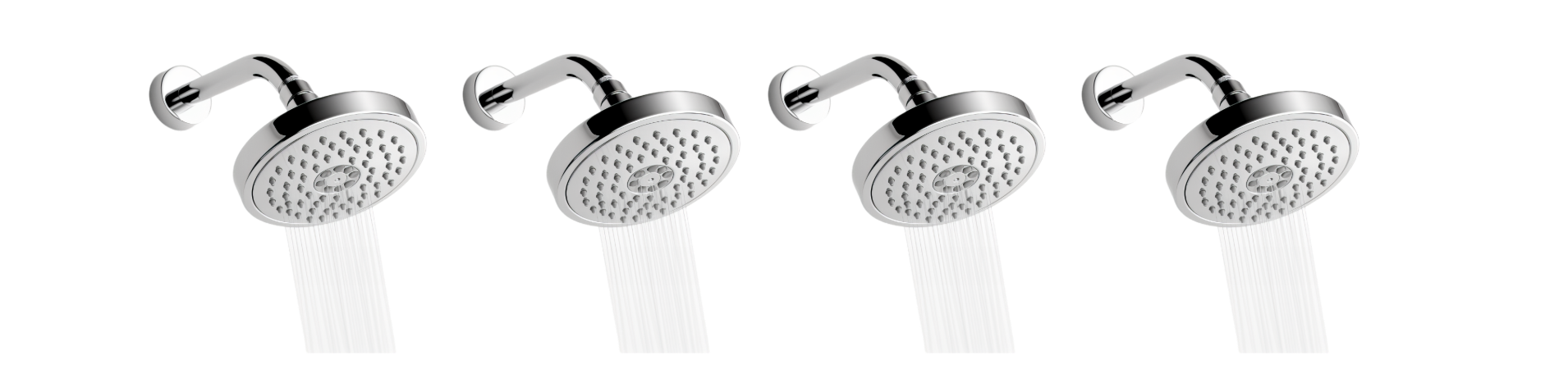
Showerhead
Showerheads often provide some of the clearest signs because warm water evaporates quickly.
Common signs include:
Uneven spray patterns
Blocked nozzles
White buildup around spray holes
Surface film
As heated water passes repeatedly through narrow openings, minerals can accumulate and partially block the flow. Warm water also increases the volatility of certain disinfectant compounds used in municipal systems, particularly chlorine, which is why some people notice a stronger odor in the shower than at the sink.
Why Shower Filters Matter
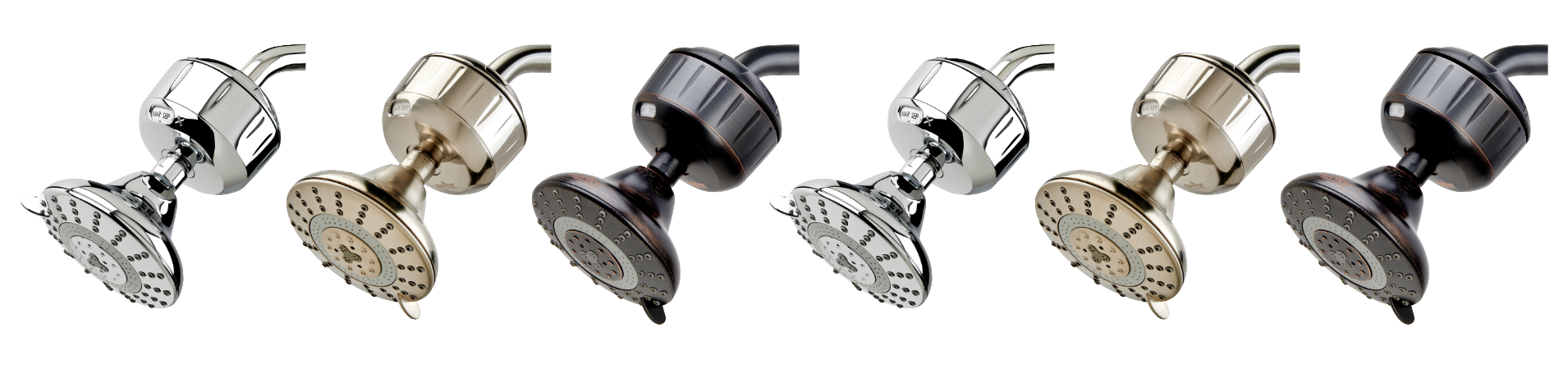
Pure Water shower filters are often chosen because showers expose water to heat and airflow, which can make treatment residuals more noticeable.
A shower filter can help reduce:
Chlorine exposure at the point of shower use
Sediment reaching the showerhead
Some odor-causing compounds
Buildup reaching internal shower components
Because hot water increases the release of certain volatile compounds, many households notice an immediate difference in odor when a shower filter is installed. A shower filter does not replace full drinking water treatment, but it addresses one of the most frequently used water points in the home.
SHOP NOW!
Why Water Spots Keep Returning
Even after cleaning, residue usually returns because the source water has not changed. That is why repeated buildup often continues unless water is treated before use.
This is especially noticeable in:
Glass shower doors
Stainless steel sinks
Coffee makers
Humidifiers
Steam appliances
The more water evaporates, the more visible dissolved solids become.
Why Distilled Water Leaves Less Behind
Pure Water Distillers work differently from standard filtration because they separate water via evaporation and condensation.
During distillation:
Water is heated into steam
Dissolved solids remain behind
Steam condenses into collected water
Carbon post-treatment further polishes taste in many systems
Because minerals and many dissolved solids do not travel with steam, distilled water is far less likely to leave visible residue in kettles, coffee equipment, steam irons, or humidifiers. That is why many appliance owners specifically choose distilled water for equipment where buildup is undesirable.
Why Household Clues Matter
Most people do not test water every day, but they do see the signs daily.
A kettle, faucet, and showerhead quietly reveal patterns such as:
Mineral presence
Evaporation residue
Treatment residual effects
Ongoing fixture buildup
These clues do not automatically mean water is unsafe, but they do explain why water behaves differently from home to home.
A Practical Way to Respond
Many households choose a layered approach:
Shower filters where warm water is used daily
Distilled water for drinking, cooking, and appliances
Routine fixture cleaning to remove existing buildup
This approach targets both convenience and consistency.
Why Many Households Turn to Pure Water Distillers
Pure Water Distillers offers home distillation systems designed to produce water through the same natural phase-change principle seen in Earth’s hydrologic cycle. For people noticing repeated mineral buildup in kettles, spotting on faucets, or clogging at showerheads, these everyday signs often prompt them to explore solutions that go beyond basic filtration. Shower filters help where water meets heat and airflow. Distillation is especially useful when purity and reduced residue matter most.
The Bottom Line
Your fixtures often tell a quiet story:
A kettle shows what heat leaves behind
A faucet shows what evaporation reveals
A showerhead shows what repeated warm water flow deposits
Those clues are often the first visible reminder that water carries more than what the eye can see. And once people notice those signs, they often begin looking more closely at how they want water to perform throughout the home, from shower to kitchen to everyday use 💧




Leave a Reply