
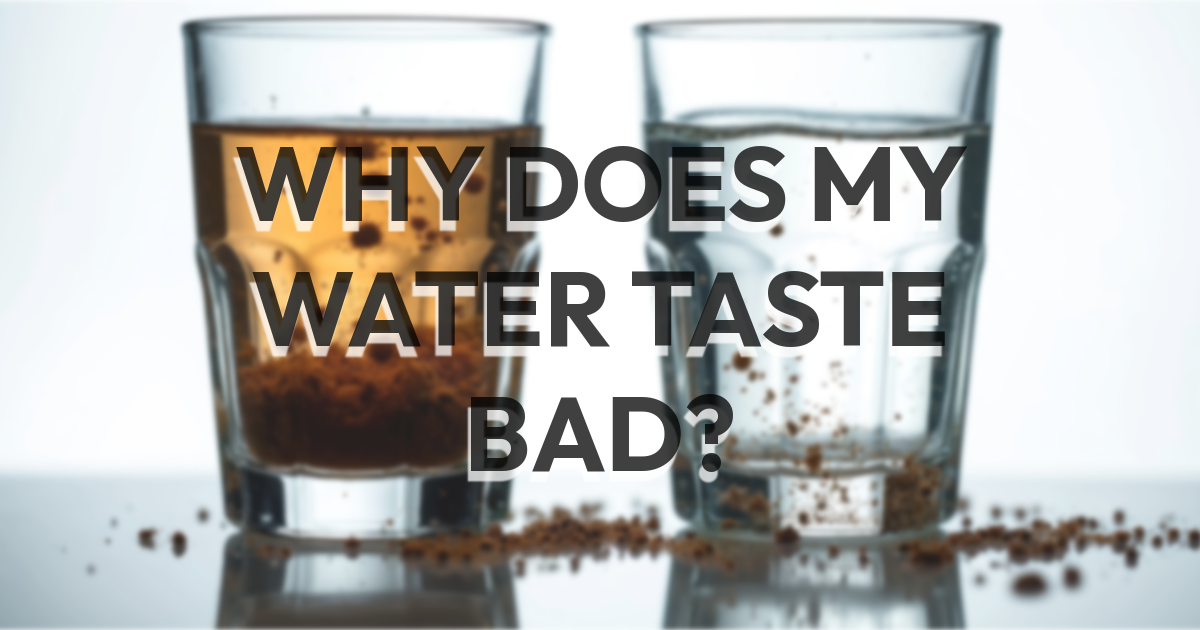
Why Does My Water Taste Bad?
Most people expect water to taste neutral, clean, and refreshing. So, when a glass of water tastes metallic, bitter, earthy, musty, salty, or chemical-like, it immediately raises questions. If water is supposed to be simple, why does it sometimes taste unpleasant?
The answer is that water is rarely just H₂O by the time it reaches your faucet. Along the way, it interacts with minerals, treatment chemicals, plumbing systems, environmental conditions, and storage materials, all of which can influence flavors. In many cases, unusual taste does not necessarily mean the water is unsafe, but it often reflects what has dissolved into it, what treatment it has undergone, or how it has traveled before reaching your home.
Understanding why water tastes different can help explain why taste changes from one location to another, from season to season, and even from one faucet to the next.
Water Naturally Picks Up What It Touches
Water is known as an excellent solvent, meaning it dissolves substances easily. As rainwater falls and moves through soil, rock, rivers, reservoirs, and underground aquifers, it naturally picks up minerals and compounds from everything it contacts. Some of the most common dissolved minerals include calcium, magnesium, sodium, potassium, and bicarbonates. These minerals can affect both flavor and mouthfeel.
For example:
- High calcium and magnesium levels often create what people call “hard water,” which can leave a chalky or mineral-heavy taste
- Sodium can contribute a slightly salty flavor
- Iron may create a metallic taste
- Sulfur compounds can cause a rotten egg odor or unpleasant aftertaste
Even naturally occurring minerals common in many water supplies can significantly affect how water tastes. In fact, some bottled waters intentionally highlight their mineral content because those minerals create a distinctive flavor profile. What tastes refreshing to one person may taste unpleasant to another because taste preferences vary widely.
Municipal Water Treatment Can Affect Flavor
Before drinking water reaches homes, municipal systems often treat it to reduce microorganisms and stabilize water quality. One of the most common disinfectants used is Chlorine. Chlorine has been widely used for decades because it helps maintain water quality throughout long distribution systems. However, even small amounts can affect taste and smell.
People often describe chlorinated water as:
- Pool-like
- Sharp
- Chemical
- Dry tasting
Some utilities also use chloramine, which is a combination of chlorine and ammonia. Chloramine often produces a different flavor profile and may linger longer in the water than chlorine alone. Treatment methods can also vary depending on season, source water conditions, and local utility needs, which means taste can change throughout the year. That is why water may taste different after heavy rain, during drought periods, or when local systems adjust treatment processes.
Plumbing Materials Can Influence Taste
Sometimes the water itself is not the main reason for the unpleasant taste. The plumbing inside a home can also contribute. As water moves through pipes, it can interact with plumbing materials such as copper, iron, galvanized metal, or older fixtures.
This can create tastes such as:
- Metallic
- Bitter
- Sour
- Stale
Copper plumbing can sometimes impart a sharp metallic taste, especially if water has been sitting in the pipes overnight. Iron pipes may contribute rust-like flavors or discoloration. Even newer plumbing systems can temporarily affect taste if water sits unused for extended periods. That is why the first glass of water in the morning may taste different than water drawn later in the day. Running cold water briefly before use often changes flavor because it flushes standing water from the pipes.
Seasonal Changes Can Shift Taste
Many people notice that water tastes different during certain times of the year. This often happens because source water changes seasonally. Warmer temperatures can increase biological activity in lakes and reservoirs, leading to the production of compounds from algae or organic matter.
Two naturally occurring compounds often associated with earthy or musty tastes are:
- Geosmin
- 2-Methylisoborneol (MIB)
These compounds can be detected by humans at extremely low levels, even at tiny concentrations. That means water may smell or taste earthy even when levels are very low. Heavy rainfall can also increase runoff entering rivers and reservoirs, bringing in additional organic material that may influence taste. Spring snowmelt, agricultural runoff, and changing reservoir conditions all contribute to seasonal flavor shifts.
Temperature Changes How Water Tastes
Water temperature strongly affects taste perception. Cold water usually tastes cleaner and more refreshing because lower temperatures reduce the intensity of dissolved flavors. Warm water often makes minerals and chemical notes more noticeable.
This is why:
- Refrigerated water often tastes better
- Tap water may taste stronger in summer
- Room-temperature water can reveal flavors you did not notice before
Temperature does not change what is in the water, but it changes how your taste buds perceive it.

Why Water Tastes Different in Different Cities
One of the biggest reasons water flavor varies is the source water.
Different communities rely on different water sources:
- Surface water from lakes and rivers
- Groundwater from wells and aquifers
- Reservoir systems
- Blended sources
Groundwater often contains more dissolved minerals because it spends more time moving through rock formations. Surface water may be influenced more by seasonal treatment adjustments and environmental conditions. That is why water in one city may taste crisp and light, while water elsewhere may taste heavy, mineral-rich, or chemically treated. Even neighboring towns can have very different water flavor profiles depending on source and infrastructure.
Taste Is Not Always a Reliable Indicator of Purity
A common misconception is that water that tastes fine must be pure, while water that tastes unusual must be of poor quality. Taste alone does not tell the full story. Some dissolved substances have no noticeable taste at all, while others can be detected at extremely low levels.
For example:
- Certain minerals are highly noticeable
- Some compounds affect smell more than taste
- Some dissolved solids create no obvious flavor
This means taste can reveal part of the picture, but not everything. Water that tastes neutral may still contain dissolved minerals, while water with a strong mineral taste may simply reflect naturally occurring content. Taste is useful for noticing change, but it does not fully define water composition.
Why Filters Change Taste
Many people notice improved taste after using filters because filtration removes or reduces certain compounds that affect flavor. Activated carbon filters are especially common for taste improvement because they help reduce chlorine and some odor-causing compounds. That is why filtered water often tastes softer or cleaner. However, different filtration systems target different substances, so taste changes depend on which substances are reduced. Some systems focus mainly on odor and flavor, while others are designed for broader reduction of dissolved materials.
Why Distillation Produces a Different Taste
Distillation differs from standard filtration methods because it separates water by evaporation and condensation.
In a distillation process:
- Water is heated until it becomes steam
- Steam rises, leaving many dissolved solids behind
- Steam cools and condenses back into liquid water
This process closely mirrors the natural hydrologic cycle — evaporation, condensation, and precipitation. Because many minerals, salts, and dissolved solids do not evaporate with water vapor, distilled water often tastes noticeably different from tap water, as it lacks these contaminants.
Some people describe distilled water as:
- Crisp
- Neutral
- Light
- Clean tasting
Others notice that it lacks the mineral character they are used to. That difference is often simply the absence of many dissolved substances that normally influence flavor. For households sensitive to changes in tap water taste, seasonal flavor shifts, or mineral-heavy water, distillation offers a consistent approach because the process remains the same regardless of variations in source water. Instead of masking taste, distillation focuses on separating water from many of the substances that contribute to flavor and purity.

Final Thoughts
If your water tastes bad, there is usually a reason, and often more than one. Minerals, disinfectants, plumbing, temperature, seasonal conditions, and source water all influence what you taste in a glass of water. Sometimes flavor changes are temporary. Sometimes they reflect the character of your local supply. What matters most is understanding that water flavor is shaped by everything water touches before it reaches you.
And because water naturally carries what it contacts, methods like distillation remain one of the most recognizable ways to return water to a simpler form, using the same separation principle nature has relied on for centuries 💧




Leave a Reply