You turn on the faucet, fill a glass, and take a sip, something most of us do without a second thought. After all, if water is coming out of your tap, it must be safe… right?
The truth is more complicated.
Municipal drinking water in the United States is regulated and treated, but “treated” does not mean “pure,” and “legal” does not mean “absent.” Across the country, water utilities work to meet federal and state standards. Yet, modern testing continues to reveal a long list of substances that can remain in tap water, even when systems are fully compliant.
So, what’s really in your water? Let’s take a closer, clearer look.
How Drinking Water Is Treated
Most tap water starts its journey in rivers, lakes, reservoirs, or underground aquifers. Before it reaches your home, it typically goes through several treatment steps, including:
Coagulation and filtration to remove large particles
Disinfection using chemicals like chlorine or chloramine
Corrosion control to limit pipe degradation
These processes are designed to reduce bacteria and visible contaminants, not to eliminate everything that modern labs can detect. In fact, many substances are allowed in drinking water at certain levels because regulations are based on feasibility, cost, and risk management, but not on total removal.
That’s why your water can meet all legal standards and still contain trace contaminants.
“Below the Legal Limit” Doesn’t Mean “Not There”
One of the biggest misconceptions about drinking water is that if a contaminant is regulated, it’s gone.
Regulations establish maximum allowable levels, not zero tolerance. Water systems are considered compliant as long as contaminants remain below these thresholds.
Thanks to advances in testing, laboratoriescan now detect substances at parts per billion (ppb) and parts per trillion (ppt). That’s equivalent to a few drops in an Olympic-sized swimming pool. While these levels may seem small, their presence raises important questions, especially when multiple substances are present together.
Common Substances Found in Tap Water
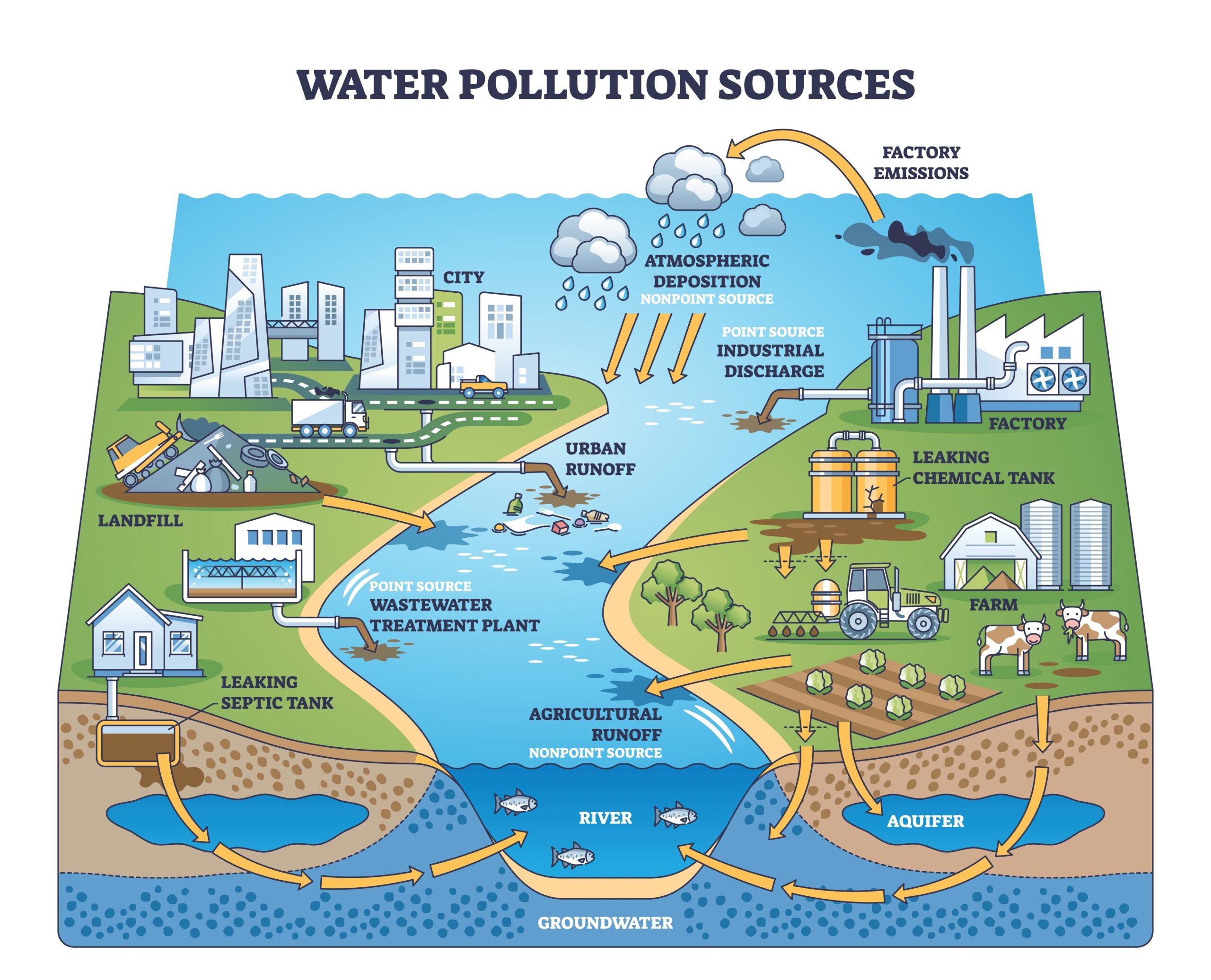
While water quality varies widely by location, several categories of contaminants recur in water reports nationwide.
Disinfection Byproducts
Chlorine and chloramine are commonly used to kill harmful microbes. When these disinfectants interact with organic matter in water, they can form disinfection byproducts, such as trihalomethanes (THMs) and haloacetic acids (HAAs).
These compounds are regulated, but they are rarely removed completely before water reaches the tap.
Heavy Metals
Heavy metals can enter drinking water through natural sources or aging infrastructure.
Commonly detected metals include:
Lead, often from old pipes or solder
Copper, typically from household plumbing
Arsenic, which can occur naturally in groundwater
Even low-level exposure over time is a concern for many households, especially those with older plumbing systems.
Agricultural Chemicals
In agricultural regions, fertilizers and pesticides can seep into groundwater and surface water supplies.
Examples include:
Nitrates, commonly associated with fertilizer runoff
Herbicide and pesticide residues, depending on local land use
These substances may fluctuate seasonally and are often present at trace levels that remain within regulatory limits.
Industrial Compounds and “Forever Chemicals”
Some of the most talked-about water contaminants today are PFAS (per- and polyfluoroalkyl substances), often referred to as “forever chemicals” because they don’t easily break down in the environment.
PFAS have been used in nonstick cookware, stain-resistant fabrics, and firefighting foams. They are now detected in water supplies across the U.S., even in areas far from industrial sites.
While regulations around PFAS continue to evolve, many water systems are still working to address them.
Pharmaceuticals and Personal Care Products
Modern wastewater testing has identified trace amounts of:
Prescription medications
Hormones
Personal care product residues
These compounds typically enter water sources through wastewater discharge and do not always get fully removed by conventional treatment processes.
What About Bottled Water?
Many people turn to bottled water, believing it’s cleaner or safer. However, bottled water is often sourced from municipal supplies and may undergo minimal additional treatment.
Bottled water is regulated differently from tap water, and testing results are not always as transparent or frequently disclosed. Plastic packaging also introduces additional considerations related to storage and environmental impact.
Understanding Your Water Quality Report
Every community water system is required to provide an annual Consumer Confidence Report (CCR). While these reports are valuable, they can be difficult to interpret.
Important things to keep in mind:
Listed contaminants may still be present, even if compliant
Not all unregulated substances are required to be reported
Results reflect system-wide averages, not necessarily what comes out of your specific tap
Your home’s plumbing, water heater, and local conditions can all influence final water quality.
Why Many People Are Rethinking Water Purity
As awareness grows around what can remain in treated water, more households are exploring additional purification methods, not because tap water is unsafe, but because they want greater control and consistency.
This shift isn’t about fear. It’s about transparency, informed choice, and reducing unnecessary exposure wherever possible.
Distillation: Mimicking Nature’s Purification Process
Distillation works by heating water until it becomes steam, then cooling it back into liquid form. This process mirrors the natural water cycle of evaporation, condensation, and precipitation.
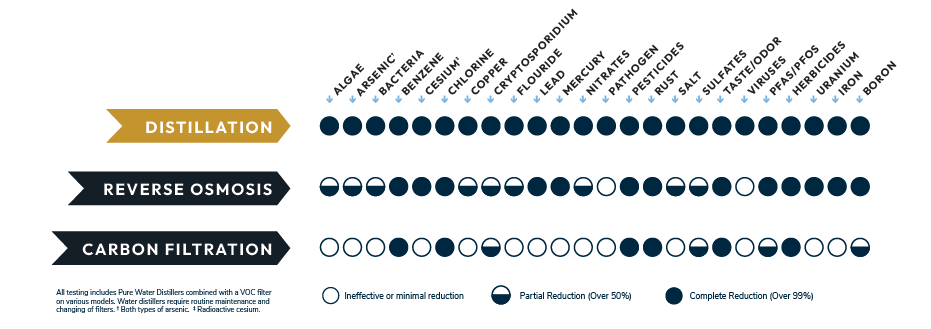
Because many contaminants do not evaporate with water, distillation is effective at removing a broad range of substances, including:
Dissolved solids
Heavy metals
Microorganisms
Chemical residues
The result is water that is close to pure H₂O, with contaminants physically separated and left behind.
Pure Water Distillers remove 99.9% of most contaminants in water. Pure Water Distillers produce vapor-distilled water in the comfort of your home! There’s no need to go out to buy water or throw away countless plastic bottles. It has a clean, refreshing taste that is perfect for drinking, cooking, ice, and more. Compare our units to other water purification methods, and you will see that distillation is the gold standard. Shop for your own water distillernow!
Why Material and Design Matter
Not all purification systems are created equal. Materials used in water treatment equipment can influence its quality.
High-quality distillers often use:
Stainless steel components
Carefully designed condensation systems
Post-filtration options for volatile compounds
Attention to materials and construction helps ensure that water remains clean throughout the purification process.
A More Informed Relationship with Water
Water is essential to daily life, used for drinking, cooking, coffee, baby formulas, humidifiers, medical devices, and more. Knowing what’s in your water empowers you to make choices aligned with your values and comfort level.
You don’t need to panic about your tap water. But you can ask better questions.
Where does my water come from?
What’s allowed to remain in it?
Am I comfortable with that level of uncertainty?
The Bottom Line
“What’s really in my water?” is no longer a fringe question; it’s one many households are asking as testing technology advances and awareness grows.
Treated water plays a vital role in public health, but treatment does not equal total removal. Trace contaminants, byproducts, and residues can remain, even in fully compliant systems.
Understanding your water is the first step. Choosing how pure you want it to be is the next step.
At MyPureWater, we believe clarity matters because when it comes to water, what you don’t see can matter just as much as what you do.




Leave a Reply