

People start drinking distilled water for many different reasons. Some discover it because they want to reduce their exposure to contaminants commonly found in drinking water. Others learn about distillation during a boil-water advisory and begin researching reliable ways to purify their water. Still others encounter distillation while comparing home drinking water treatment options and find that it is the most effective single method of water purification available.
Just as many paths lead people to distilled water, there are also many reasons they keep drinking it. Over the years, I’ve heard countless stories about the benefits of distilled water. I put together three of my recent favorite reasons people tell us they never want to go back once they start drinking distilled water.
1 Protection Against Known and Unknown Contaminants

Distillation purifies water by using the same principles that drive Earth’s natural water cycle [1]. A heat source, such as the sun, warms a body of water and causes it to evaporate. The water vapor rises, condenses into clouds, and eventually returns to the Earth as rain [2]. A water distiller recreates this process in a controlled environment to produce highly purified water.
Distillation is a reductive purification process, not an additive one. Methods such as chlorination add chemicals to water to neutralize or reduce contaminants [4]. Distillation, by contrast, removes contaminants by physically separating them from the water.
This fundamental difference is one reason distillation is considered the most effective single water purification method available. As water evaporates, contaminants with higher boiling points remain behind in the boiling chamber. The purified water vapor is then condensed back into liquid form, resulting in water that is up to 99.99% pure H₂O [5]. My Pure Water distillers also incorporate post-carbon filtration to address certain volatile compounds that may have boiling points near or below that of water, providing an additional layer of purification.
Designing and testing filtration or additive-based water treatment systems requires significant research and engineering. Filter manufacturers must carefully design their products to target specific contaminants and then verify their effectiveness through testing [6]. Because contaminants have different chemical and physical properties, no single filter technology can remove every contaminant from water [7].
Distillation approaches the problem differently. Rather than targeting specific contaminants, it separates water from impurities through evaporation and condensation. As a result, distillation effectively removes a broad spectrum of contaminants, including many that may not have been anticipated during system design. This makes distillation one of the most comprehensive and predictable water purification methods available.
One advantage of distillation is the peace of mind it can provide. With a filtration-based system, you may wonder whether the filter was designed or tested to address a particular contaminant, and whether it still performs as intended as it ages. Distillation, by contrast, relies on physically separating water from impurities, making it effective against a wide range of known and unknown contaminants. Because it does not depend on filter media for primary purification, you also avoid the ongoing concern of replacing filters to maintain water quality.
Lead in Drinking Water
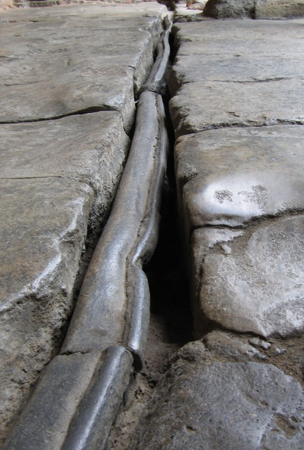
One of the most well-known examples is lead. It’s hard to believe that lead piping was used extensively in ancient Rome and remained common in modern plumbing systems well into the twentieth century [8]. People favored it because it was easy to work with, durable, and resistant to corrosion. Over time, however, researchers began to recognize that people with prolonged lead exposure—such as miners, painters, and pottery workers—often suffered from neurological and physical health problems. High levels of exposure could cause severe abdominal pain, cognitive impairment, and even paralysis [9].
By the late nineteenth and early twentieth centuries, scientists discovered that small amounts of lead could dissolve into drinking water and be consumed over time. While these low levels of exposure did not necessarily cause immediate symptoms, they were found to contribute to long-term health problems, particularly in children.
The United States took a major step toward addressing this issue by passing the Safe Drinking Water Act in 1974, and it further restricted the use of lead-containing materials in drinking water systems in 1986. Yet despite the dangers we recognize today, people relied on lead plumbing for centuries before fully understanding and broadly accepting its risks [10].
The History of PFAs (Polyfluoroalkyl Substances)
A more recent example is PFAS, or per- and polyfluoroalkyl substances, often called “forever chemicals.” These compounds were developed in the 1930s and 1940s because they resist heat, water, grease, and chemical reactions. As a result, PFAS became widely used in products such as nonstick cookware, waterproof clothing, food packaging, firefighting foams, and countless industrial applications.
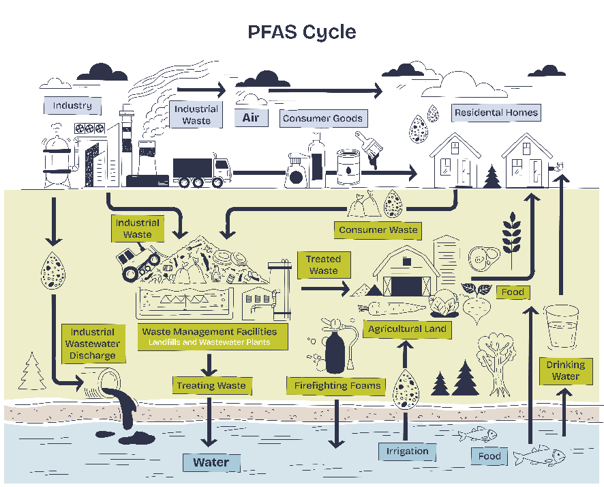
For decades, manufacturers produced and disposed of PFAS-containing products with little understanding of their long-term environmental impact. Over time, these chemicals accumulated in soil, groundwater, rivers, wildlife, and eventually drinking water supplies. By the 1990s and early 2000s, the issue gained widespread attention as researchers discovered PFAS contamination in groundwater, rainwater, municipal water systems, and even the blood of people with no known direct exposure.
Today, many PFAS compounds have been phased out or restricted, but their persistence in the environment remains a significant challenge. Because these chemicals break down extremely slowly, they can remain in water, soil, and living organisms for decades. Studies have found that a large percentage of Americans have detectable PFAS levels in their blood [11]. Ongoing research has associated exposure to certain PFAS compounds with elevated cholesterol, thyroid disorders, liver effects, reduced immune response, and an increased risk of certain cancers.
Assuming there are no contaminants in our food or water that science has yet to discover or fully understand would be a mistake. Human knowledge is constantly evolving, and at no point in history have we possessed all the answers. This is especially true today, when new chemicals, materials, and compounds are being developed and introduced into the environment at an unprecedented pace. Even the scientists and manufacturers who create these substances cannot always predict their long-term effects on human health or the environment.
That uncertainty is one reason people value distillation so highly. Rather than identifying and selectively removing specific contaminants, distillation removes virtually everything from the water except H₂O.
By starting with water that is as pure as possible, we gain greater control over what we choose to consume. If we decide to add minerals, electrolytes, or other substances to our water, we can do so intentionally and with confidence. But first, we want to know that the water itself is free from both known contaminants and those that may not yet be fully understood. For some folks, that’s one of the greatest benefits of distilled water—it puts them in control of what is in their drinking water, rather than leaving that decision to chance.
2 The Taste of Pure Water
Some people believe water has no taste at all and therefore have no preference when it comes to what they drink. Others insist they can tell the difference between every brand of bottled water—and even between the water from their own refrigerator and the water from a friend’s home. Here at the office, we tend to fall into the second camp.
After all, if distilled water didn’t taste good, it’s unlikely that so many people would choose to drink it every day. We have occasionally heard from customers who say distilled water tastes different at first, especially if they’ve been drinking tap water for years. However, many of those same people tell us that after just a few days of drinking distilled water, they begin to appreciate the difference.
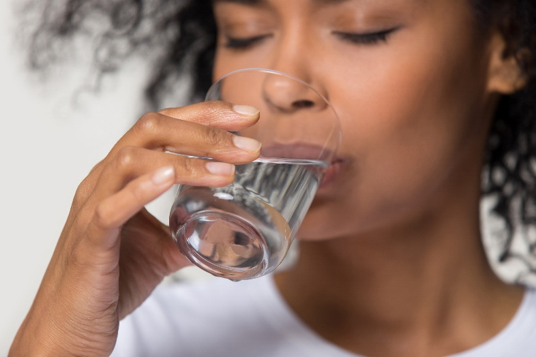
Distilled water tastes as neutral and clean as water can be. Because virtually all impurities have been removed, there are no minerals, chemicals, or other contaminants competing with the natural taste of whatever you’re drinking or preparing. This is one reason many of our customers prefer distilled water for tea, coffee, soups, and pasta. They avoid issues caused by hard water and enjoy the fact that the water itself doesn’t alter the flavor of their food and beverages. When you brew tea with distilled water, you taste the tea. When you cook with distilled water, you taste the ingredients—not whatever happened to be in the water.
Many distilled water drinkers also describe the experience as exceptionally smooth. After switching from tap or bottled water, some people notice that distilled water seems lighter and cleaner on the palate. It goes down easily and leaves a refreshing sensation rather than an aftertaste. While everyone’s experience is different, many customers tell us that distilled water simply feels more satisfying when they’re thirsty.
Taste and texture are, of course, highly personal experiences. What one person notices, another may not. Yet one of the most common comments we hear from long-time customers is surprisingly consistent: once they get used to drinking distilled water, they find it difficult to go back to tap water or even most bottled waters.
3 Taking Control of Your Drinking Water (Decentralized Water Purification)
The final reason I chose to include in this article is the sense of control and peace of mind that comes with owning a home water distiller.
As discussed earlier in the section on unknown contaminants, science and regulation are constantly evolving. New contaminants are discovered, new health effects are identified, and our understanding of what is safe to consume continues to change. Municipal water utilities and regulatory agencies perform an important public service, but they cannot instantly identify every emerging contaminant or predict every future health concern.
Municipal water treatment systems are also not designed to produce perfectly pure water. Their goal is to provide water that meets established safety standards for public consumption [12]. In some areas, however, certain populations—such as infants, the elderly, or individuals with compromised immune systems—may still be advised to take additional precautions [13]. Modern water treatment facilities must also contend with a growing number of synthetic compounds, including PFAS, nitrates, pharmaceuticals, and microplastics, many of which present challenges that did not exist a century ago.
For many people, a home water distiller provides an added layer of confidence. By removing virtually all contaminants from the water, distillation reduces reliance on the effectiveness of any single treatment process and allows homeowners to take a more active role in the quality of the water they drink.
That doesn’t mean municipal water treatment is unnecessary. In fact, municipal systems remain incredibly valuable. They deliver water to our homes, remove sediment and large contaminants, and provide the foundation for safe and reliable water infrastructure. A home distiller simply builds upon that foundation.
With one of our automatic distillers, you can connect the unit directly to your home’s water supply. The distiller automatically draws water, purifies it, and stores the distilled water for use. Many well-water users also choose to pretreat their water to remove sediment or other obvious impurities before letting the distiller complete the purification process.
For us, the appeal of a home water distiller is simple: it provides an additional level of confidence, convenience, and control over one of the most important things we consume every day—our drinking water.
Conclusion
These are just a few reasons I’ve heard from customers, affiliates, and colleagues for loving distilled water. A home distiller gives you confidence in the quality of your drinking water while delivering a clean, crisp taste many people find hard to give up. When you can enjoy both peace of mind and great-tasting water, it’s truly the best of both worlds.
If you’re interested in purchasing a water distiller for your home or business, visit us at mypurewater.com or speak with a member of our sales team by calling 402-467-9300, extension 100.
References
[1] My Pure Water – What is Distilled Water and the Hydrologic Cycle https://mypurewater.com/blog/2010/09/14/what-is-distilled-water/
[2] National Oceanic and Atmospheric Administration U.S. Department of Commerce – The water cycle
https://www.noaa.gov/education/resource-collections/freshwater/water-cycle
[3] USGS – Evaporation and the Water Cycle
https://www.usgs.gov/water-science-school/science/evaporation-and-water-cycle
[4] Minnesota Department of Health – Drinking Water Chlorination
https://www.health.state.mn.us/communities/environment/water/factsheet/chlorination.html
[5] My Pure Water – 3rd Party Water Quality Lab Test Results
[6] National Institute of Health – A Review on Reverse Osmosis and Nanofiltration Membranes for Water Purification
https://pmc.ncbi.nlm.nih.gov/articles/PMC6723865
[7] CDC – About Choosing Home Water Filters
https://www.cdc.gov/drinking-water/prevention/about-choosing-home-water-filters.html
[8] University of Chicago – Lead Poisoning and Rome
http://penelope.uchicago.edu/~grout/encyclopaedia_romana/wine/leadpoisoning.html
[9] Mayo Clinic – Lead poisoning
https://www.mayoclinic.org/diseases-conditions/lead-poisoning/symptoms-causes/syc-20354717
[10] EPA – Lead Poisoning: A Historical Perspective
https://www.mayoclinic.org/diseases-conditions/lead-poisoning/symptoms-causes/syc-20354717
[11] Manufacturing Dive – The history of PFAS: From World War II to your Teflon pan
https://pfas-1.itrcweb.org/wp-content/uploads/2020/10/history_and_use_508_2020Aug_Final.pdf
[12] EPA – National Primary Drinking Water Regulations
https://www.epa.gov/ground-water-and-drinking-water/national-primary-drinking-water-regulations
[13] CDC – Preventing Waterborne Germs at Home
https://www.cdc.gov/drinking-water/prevention/preventing-waterborne-germs-at-home.html
Leave a Reply